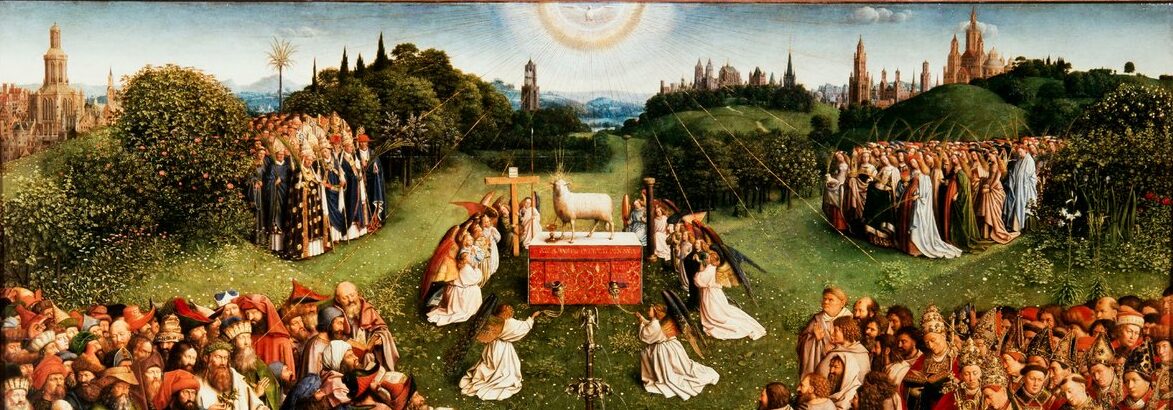
“Heresy causes the Loss of Papal Office”
The Common Teaching of Catholic Theologians and Canonists
Table of Contents
- Introduction: The Common Teaching
- The Vincentian Canon and the Authority of Tradition
- Gratian’s Decretum and the Principle “Summa sedes a nemine iudicetur”
- Testimonies of Popes
4.1 Pope Innocent III
4.2 Pope Paul IV
4.3 Vatican Council I (as reported by Archbishop John Baptist Purcell)
4.4 Pope Benedict XV – The 1917 Code of Canon Law (Canon 188 §4)
- Doctors of the Church
5.1 Saint Robert Bellarmine
5.2 Saint Antoninus of Florence
5.3 Saint Francis de Sales
5.4 Saint Alphonsus Maria Liguori
- Other Major Theologians and Canonists
6.1 Cardinal Cajetan (Tommaso de Vio)
6.2 The Catholic Encyclopedia (1907 and 1914)
6.3 Huggucio of Pisa
6.4 Girolamo Savonarola
6.5 Bishop Josef Fessler
6.6 Archbishop John Baptist Purcell
6.7 Cardinal Louis Billot
6.8 Matthaeus Conte a Coronata
6.9 Caesar Badii
6.10 Dominic Prümmer
6.11 F.X. Wernz and P. Vidal
6.12 Udalricus Beste
6.13 A. Vermeersch and I. Creusen
6.14 Eduardus F. Regatillo
6.15 Serapius Iragui
6.16 Henry Ignatius Dudley Ryder
6.17 J. Wilhelm
6.18 Ayrinhac on Loss of Ecclesiastical Offices
- The Papal Coronation Oath (attributed to Pope Saint Agatho)
- Conditions: Notorious and Public Heresy
- Conclusion
- Introduction: The Common Teaching
A public heretic cannot retain the papacy. It may seem surprising to Catholics who have been taught the doctrine of papal infallibility that a pope, acting as a private teacher, can nevertheless fall into heresy and automatically lose his office. The number and the weight of the theological authorities support the contention that a validly elected pope who committed a public and notorious act of heresy would automatically cease to be pope. The authors tell us that it is the “most common” teaching of the canonists and theologians or that they “commonly teach” it. Moreover, three doctors of the Church have taught it, none have taught contrary; the canonized theologians are unanimous; Saint Robert Bellarmine, Doctor of the Church, wrote that “this is the teaching of ALL the ancient Fathers”. Lest anyone think that this principle is a fantasy invented by Traditionalist “fanatics,” or at best merely a minority opinion held by one or two obscure Catholic writers, the following selection of texts from popes, saints, canonists, and theologians is presented. Lay readers may not be familiar with the names of Coronata, Iragui, Badii, Prümmer, Wernz, Vidal, Beste, Vermeersch, Creusen, and Regatillo. These priests were internationally recognized authorities in their fields before the Second Vatican Council. Our citations are drawn from the extensive treatises they wrote on canon law and dogmatic theology. (Cekada, 1995)
- The Vincentian Canon and the Authority of Tradition
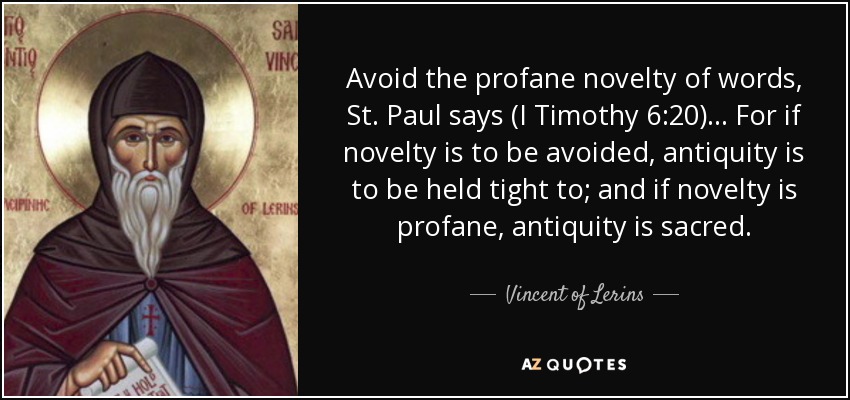
An important Catholic principle states that when a teaching has been learned “everywhere, always and by everyone”, it belongs to the Revelation and is infallible. This principle was held by all Church Fathers. It can be read about in the Commonitorium of St. Vincent de Lerins. (St. Vincent of Lérins, Commonitorium)
- Gratian’s Decretum and the Principle “Summa sedes a nemine iudicetur, nisi a fide devius inveniatur”
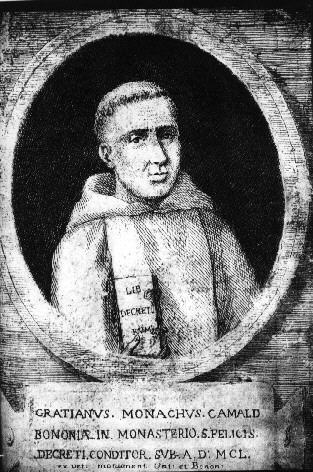
The Decretum Gratiani, also known as the Concordia discordantium canonum or Concordantia discordantium canonum or simply as the Decretum, is a collection of Canon law compiled and written in the 12th century as a legal textbook by the jurist known as Gratian. It forms the first part of the collection of six legal texts, which together became known as the Corpus Juris Canonici. It was used by canonists of the Roman Catholic Church until Pentecost (May 19) 1918, when a revised Code of Canon Law (Codex Iuris Canonici) promulgated by Pope Benedict XV on 27 May 1917 obtained legal force. (Gratian, Decretum Gratiani, 12th century)
In the Decretum, Gratian wrote a principle that was held “everywhere, always and by everybody” in the Church, hence it is an infallible doctrine of Tradition:
“Summa sedes a nemine iudicetur, NISI a fide devius inveniatur”:
“the Highest See cannot be judged by anyone, unless he has been found deviating from the faith”. (Gratian, Decretum Gratiani)
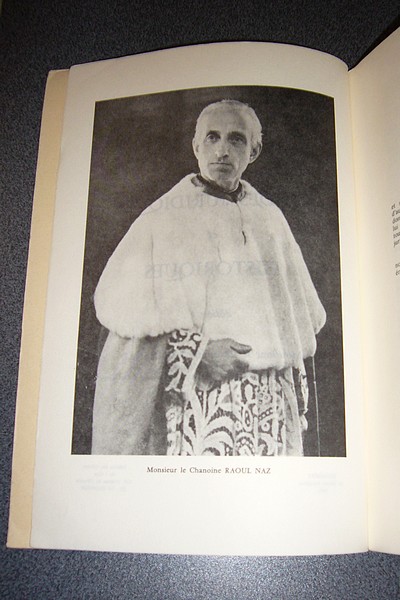
Jurist Raoul Naz states that it is not “judging” in the strict sense but in the broad sense: the Church (the sound part of the teaching Church, the bishops who are not heretic) will not judge properly but can note that a pope has deviated from the faith and by this fact is fallen from the See. (Naz, as cited in Cekada, 1995)
- Testimonies of Popes
4.1 Pope Innocent III (ca. 1160–1216)
He stated: “The pope should not flatter himself about his power, nor should he rashly glory in his honor and high estate, because the less he is judged by man, the more he is judged by God. Still the less can the Roman Pontiff glory, because he can be judged by men, or rather, can be shown to be already judged, if for example he should wither away into heresy, because he who does not believe is already judged. In such a case it should be said of him: ‘If salt should lose its savor, it is good for nothing but to be cast out and trampled under foot by men.’” (Pope Innocent III, Sermo 4)
4.2 Pope Paul IV
Pope Paul IV (1559) decreed in the Bull Cum ex Apostolatus Officio (16 February 1559):
“Further, if ever it should appear that any bishop (even one acting as an archbishop, patriarch or primate), or a cardinal of the Roman Church, or a legate (as mentioned above), or even the Roman Pontiff (whether prior to his promotion to cardinal, or prior to his election as Roman Pontiff), has beforehand deviated from the Catholic faith or fallen into any heresy, We enact, decree, determine and define:
– Such promotion or election, in and of itself, even with the agreement and unanimous consent of all the cardinals, shall be null, legally invalid and void.
– It shall not be possible for such a promotion or election to be deemed valid or to be valid, neither through reception of office, consecration, subsequent administration, or possession, nor even through the putative enthronement of a Roman Pontiff himself, together with the veneration and obedience accorded to him by all.
– Such promotion or election shall not, through any lapse of time in the foregoing situation, be considered even partially legitimate in any way.
– Each and all of the words, as acts, laws, appointments of those so promoted or elected — and indeed, whatsoever flows therefrom — shall be lacking in force, and shall grant no stability and legal power to anyone whatsoever.
– Those so promoted or elected, by that very fact and without the need to make any further declaration, shall be deprived of any dignity, position, honour, title, authority, office and power.” (Pope Paul IV, Bull Cum ex Apostolatus Officio, 16 February 1559)
4.3 Vatican Council I (as reported by Archbishop John Baptist Purcell)
At the First Vatican Council, Archbishop John Baptist Purcell of Cincinnati reported the following exchange that took place among the Fathers: “The question was also raised by a Cardinal, ‘What is to be done with the Pope if he becomes a heretic?’ It was answered that there has never been such a case; the Council of Bishops could depose him for heresy, for from the moment he becomes a heretic he is not the head or even a member of the Church. The Church would not be, for a moment, obliged to listen to him when he begins to teach a doctrine the Church knows to be a false doctrine, and he would cease to be Pope, being deposed by God Himself. […] If he denies any dogma of the Church held by every true believer, he is no more Pope than either you or I…” (Purcell, address at Vatican Council I, quoted in Rev. James J. McGovern, The Life and Life Work of Pope Leo XIII, Chicago, IL: Allied Printing, 1903, pp. 239-241)
4.4 Pope Benedict XV – The 1917 Code of Canon Law (Canon 188 §4)
On 27 May 1917, Pope Benedict XV promulgated the revised Code of Canon Law (Codex Iuris Canonici), which obtained legal force on Pentecost, 19 May 1918. This Code replaced the earlier Corpus Juris Canonici (of which Gratian’s Decretum formed the first part) and remained in force until 1983.
Canon 188 §4 states:
“Through tacit resignation, accepted by the law itself, all offices become vacant ipso facto and without any declaration if a cleric: … 4) has publicly forsaken the Catholic faith.” (1917 Codex Iuris Canonici)
The great canonist H. A. Ayrinhac taught that Canons 185-191 on the loss of ecclesiastical offices “applies to all offices, the lowest and the highest, not excepting the Supreme Pontificate.” (Ayrinhac, General Legislation in the New Code of Canon Law, p. 346)
- Doctors of the Church
5.1 Saint Robert Bellarmine Doctor of the Church (1542–1621)

: “Therefore, the true opinion is the fifth, according to which the Pope who is manifestly a heretic ceases by himself to be Pope and head, in the same way as he ceases to be a Christian and a member of the body of the Church; and for this reason he can be judged and punished by the Church.
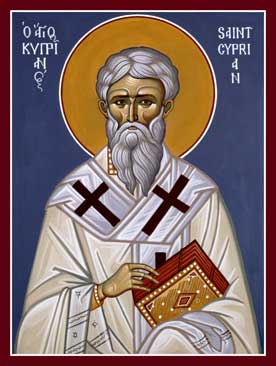
This is the opinion of all the ancient Fathers, who teach that manifest heretics immediately lose all jurisdiction, and outstandingly that of St. Cyprian (lib. 4, epist. 2) … The foundation of this argument is that the manifest heretic is not in any way a member of the Church … but manifest heretics do not pertain in any manner, as we have already proved.” (St. Robert Bellarmine, De Romano Pontifice, lib. II, cap. 30)
Bellarmine further states: “A pope who is a manifest heretic (per se) ceases to be pope and head, just as he ceases automatically to be a Christian and a member of the Church. Wherefore, he can be judged and punished by the Church. This is the teaching of all the ancient Fathers who teach that manifest heretics immediately lose all jurisdiction.” (St. Robert Bellarmine, De Romano Pontifice, II.30)
He cites St. Cyprian, St. Athanasius, St. Augustine and St. Jerome, and explains that the ancient Fathers based their arguments on the very nature of heresy by divine law, not on ecclesiastical law. (St. Robert Bellarmine, De Romano Pontifice, lib. II, cap. 30)
5.2 Saint Antoninus (1389–1459)
: “In the case in which the pope would become a heretic, he would find himself, by that fact alone and without any other sentence, separated from the Church. A head separated from a body cannot, as long as it remains separated, be head of the same body from which it was cut off. A pope who would be separated from the Church by heresy, therefore, would by that very fact itself cease to be head of the Church. He could not be a heretic and remain pope, because, since he is outside of the Church, he cannot possess the keys of the Church.” (St. Antoninus of Florence, Summa Theologica, quoted in Actes de Vatican I)
5.3 Saint Francis de Sales (1567–1622):
“Now when [the Pope] is explicitly a heretic, he falls ipso facto from his dignity and out of the Church.” (St. Francis de Sales, The Catholic Controversy)
5.4 Saint Alphonsus Maria Liguori (1696–1787):
“If, however, God were to permit a pope to become a notorious and contumacious heretic, he would by such a fact cease to be pope, and the apostolic chair would be vacant.” He also taught that papal heresy would have to be “notorious” before a loss occurred. “If ever a pope, as a private person, should fall into heresy, he would at once fall from the pontificate.” (St. Alphonsus Maria Liguori, Verita della Fede, III, VIII. 9-10)
- Other Major Theologians and Canonists
6.1 Cardinal Cajetan (Tommaso de Vio) O.P. (1469–1534):
The famous axiom “Ubi Petrus, ibi Ecclesia” holds true only when the Pope acts and behaves as the Pope; otherwise, “neither is the Church in him, nor is he in the Church.” (Cajetan, commentary on St. Thomas Aquinas, Summa Theologica, IIa IIae, Q. 39, Art. 1, ad 6)
If the Sovereign Pontiff subverts ecclesiastical ceremonies, disobeys the law of Christ, orders what is contrary to natural or divine law, or pertinaciously fails to respect what was established for the common order of the Church, then “neither the Church would be in him, nor he in the Church.” (Cajetan, In II-II, q. 39, a. 1, n. VI)
6.2 The Catholic Encyclopedia (1907 and 1914)
“It has been a common teaching of theologians that a validly elected pope can fall into heresy and so vacate the See of Peter by automatic tacit resignation.” “Were a Pope to become a public heretic … many theologians hold that no formal sentence of disposition would be required, as by becoming a public heretic the Pope would ipso facto cease to be pope.” (The Catholic Encyclopedia, 1907, Vol. VII, p. 261)
Wilhelm: “The pope himself, if notoriously guilty of heresy, would cease to be pope because he would cease to be a member of the Church.” “For a heretical pope has ceased to be a member of the Church, and cannot, therefore, be its head.” (Wilhelm, 1914, Catholic Encyclopedia)
6.3 Huggucio of Pisa (+1210):
“A pope who indeed [is] a fornicator in public and has a concubine in public can indeed be deposed because to scandalize the Church is in itself heresy.” (Huggucio of Pisa, Summa Decretorum)
6.4 Girolamo Savonarola (1452–1498):
“The Lord … has, for some time past, allowed the Church to be without a pastor. For I bear witness in the name of God that this Alexander VI is in no way Pope and cannot be…. This I declare … that the man is not a Christian; he does not even believe any longer that there is a God; he goes beyond the final limits of infidelity and impiety.” (Savonarola, Letter to the Emperor)
6.5 Bishop Josef Fessler (1875):
“If … a man were elected Pope who might uphold heretical doctrine to the whole Church formally as Catholic doctrine de fide … then we should have the case before us for which Pope Paul IV, in the above-named Bull provides, by quashing the election of such a man to the Papacy, and declaring it ‘null and void.’” (Fessler, The True and False Infallibility of the Popes, 1875)
6.6 Archbishop John Baptist Purcell
Archbishop John Baptist Purcell of Cincinnati (address at Vatican Council I): “The question was also raised by a Cardinal, ‘What is to be done with the Pope if he becomes a heretic?’ It was answered that there has never been such a case; the Council of Bishops could depose him for heresy, for from the moment he becomes a heretic he is not the head or even a member of the Church. The Church would not be, for a moment, obliged to listen to him when he begins to teach a doctrine the Church knows to be a false doctrine, and he would cease to be Pope, being deposed by God Himself. […] If he denies any dogma of the Church held by every true believer, he is no more Pope than either you or I…” (Purcell, address at Vatican Council I, 1870, quoted in Rev. James J. McGovern, The Life and Life Work of Pope Leo XIII, Chicago, IL: Allied Printing, 1903, pp. 239-241)
6.7 Cardinal Louis Billot

Cardinal Louis Billot (1846–1931): “Once the hypothesis that a Pope can become a known and public heretic is conceded as a possibility, it would follow that it must be admitted without hesitation that such a Pope would ipso facto lose his papal authority since, in betraying the faith, he would by his own will, have separated himself from the body of the Church.” (Billot, De Ecclesia Christi, 1921)
6.8 Matthaeus Conte a Coronata
Matthaeus Conte a Coronata (Institutiones Iuris Canonici, Rome: Marietti, 1950, I:312, 316):
“Loss of the office of the Roman Pontiff. This can occur in various ways: … c) Notorious heresy. … If such a situation were indeed to occur, he would, by divine law, fall from office without any sentence, and even without a declaratory one. … if the Roman Pontiff were to profess heresy, before any condemnatory sentence … he would lose his authority.”
6.9 Caesar Badii
Caesar Badii (Institutiones Iuris Canonici, Florence: Fiorentina, 1921, pp. 160, 165):
“Cessation of pontifical power. This power ceases: … (d) Through notorious and openly divulged heresy. A publicly heretical pope would no longer be a member of the Church; for this reason, he could no longer be its head.”
6.10 Dominic Prümmer
Dominic Prümmer (Manuale Iuris Canonici, Freiburg im Breisgau: Herder, 1927, p. 95):
“The power of the Roman Pontiff is lost: … (c) By his perpetual insanity or by formal heresy. … The Authors indeed commonly teach that a pope loses his power through certain and notorious heresy …”
6.11 F.X. Wernz and P. Vidal
F.X. Wernz and P. Vidal (Ius Canonicum, Rome: Gregorian, 1943, 2:453):
“Through notorious and openly divulged heresy, the Roman Pontiff … by that very fact [ipso facto] is deemed to be deprived of the power of jurisdiction even before any declaratory judgement by the Church. … A pope who falls into public heresy would cease ipso facto to be a member of the Church; therefore, he would also cease to be head of the Church.”
6.12 Udalricus Beste
Udalricus Beste (Introductio in Codicem, 3rd ed., Collegeville: St John’s Abbey Press, 1946, Canon 221):
“Not a few canonists teach that … the pontifical dignity can also be lost … through manifest and notorious heresy. In the latter case, a pope would automatically fall from his power, and this indeed without the issuance of any sentence … The reason is that, by falling into heresy, the pope ceases to be a member of the Church. He who is not a member of a society, obviously cannot be its head.”
6.13 A. Vermeersch and I. Creusen
Epitome Iuris Canonici, Rome: Dessain, 1949, p. 340 :
“The power of the Roman Pontiff ceases by death, free resignation … and notorious heresy. … he would automatically fall from a power which he who is no longer a member of the Church is unable to possess.”
6.14 Eduardus F. Regatillo
Institutiones Iuris Canonici, 5th ed., Santander: Sal Terrae, 1956, 1:396 :
“The Roman Pontiff ceases in office: … (4) Through notorious public heresy? … 5. ‘The pope loses office ipso facto because of public heresy.’ This is the more common teaching, because a pope would not be a member of the Church, and hence far less could be its head.”
6.15 Serapius Iragui
Manuale Theologiae Dogmaticae, Madrid: Ediciones Studium, 1959, p. 371:
“Theologians commonly concede that the Roman Pontiff, if he should fall into manifest heresy, would no longer be a member of the Church, and therefore could neither be called its visible head.”
6.16 Henry Ignatius Dudley Ryder (1837–1907):
“It has always been maintained by Catholic theologians that for heresy the Church may judge the Pope, because … by heresy he ceases to be Pope. … some … hold that by heresy he ipso facto ceases to be Pope: whilst others … maintain that he would not formally cease to be Pope until he was formally deposed.” (Ryder, Catholic Controversy, 6th ed., pp. 30-31)
6.17 J. Wilhelm
: “The pope himself, if notoriously guilty of heresy, would cease to be pope because he would cease to be a member of the Church.” “For a heretical pope has ceased to be a member of the Church, and cannot, therefore, be its head.” (Wilhelm, 1914, Catholic Encyclopedia)
6.18 Ayrinhac on Loss of Ecclesiastical Offices
“Loss of Ecclesiastical Offices” (Canons 185-191) “…applies to all offices, the lowest and the highest, not excepting the Supreme Pontificate.” (Ayrinhac, General Legislation in the New Code of Canon Law, p. 346)
- The Papal Coronation Oath (attributed to Pope Saint Agatho)
Pope Saint Agatho (678–681):
“I vow to change nothing of the received Tradition … Accordingly, without exclusion, We subject to severest excommunication anyone — be it ourselves or be it another — who would dare to undertake anything new in contradiction to this constituted evangelic Tradition …” (Liber Diurnus Romanorum Pontificum, Patrologia Latina 1005, S. 54). (Attributed to Pope St. Agatho, Liber Diurnus Romanorum Pontificum)
- Conditions: Notorious and Public Heresy
The canonists state that heresy would have to be notorious to effect a loss of office. It would be public only if notorious.
Canonists on the notoriety of papal heresy:
– Wilhelm: “The pope himself, if notoriously guilty of heresy …” (Wilhelm, 1914)
– Caesar Badii: “Through notorious and openly divulged heresy …” (Badii, 1921)
– Dominic Prümmer: “through certain and notorious heresy …” (Prümmer, 1927)
– F.X. Wernz and P. Vidal: “Through notorious and openly divulged heresy …” (Wernz-Vidal, 1943)
– Udalricus Beste: “through manifest and notorious heresy …” (Beste, 1946)
– A. Vermeersch and I. Creusen: “and notorious heresy …” (Vermeersch-Creusen, 1949)
– Matthaeus Conte a Coronata: “c) Notorious heresy” (Coronata, 1950)
– Eduardus F. Regatillo: “Through notorious public heresy … ipso facto” (Regatillo, 1956)
- Conclusion
The weight of theological and canonical authority—from Gratian and Popes Innocent III, Paul IV, the exchange reported at Vatican Council I, and Pope Benedict XV through the Doctors of the Church (Bellarmine, Antoninus, Francis de Sales, Alphonsus Liguori) to the major canonists of the 20th century—establishes as the common teaching that a manifest, public, and notorious heretic ceases ipso facto to be a member of the Church and therefore cannot remain its visible head, the Roman Pontiff. No contrary doctrine has been taught by any Doctor of the Church, and the principle rests ultimately on divine law and the nature of the Church as a visible society united in faith. (Cekada, 1995)
List of Sources
– Gratian, Decretum Gratiani (12th century).
– Pope Innocent III, Sermo 4.
– Pope Paul IV, Bull Cum ex Apostolatus Officio (1559).
– Archbishop John Baptist Purcell, address at Vatican Council I (1870), quoted in Rev. James J. McGovern, The Life and Life Work of Pope Leo XIII, Chicago, IL: Allied Printing, 1903, pp. 239-241.
– Pope Benedict XV, Codex Iuris Canonici (1917).
– St. Robert Bellarmine, De Romano Pontifice, lib. II, cap. 30 (1610).
– St. Antoninus of Florence, Summa Theologica (1459).
– St. Francis de Sales, The Catholic Controversy (1616).
– St. Alphonsus Maria Liguori, Verita della Fede (1787).
– Cardinal Cajetan, In Summam Theologicam S. Thomae Aquinatis, II-II, q. 39.
– The Catholic Encyclopedia (1907, 1914).
– Huggucio of Pisa, Summa Decretorum (c. 1210).
– Girolamo Savonarola, Letter to the Emperor (1490s).
– Bishop Josef Fessler, The True and False Infallibility of the Popes (1875).
– Archbishop John Baptist Purcell, address at Vatican Council I (1870), quoted in Rev. James J. McGovern, The Life and Life Work of Pope Leo XIII, Chicago, IL: Allied Printing, 1903, pp. 239-241.
– Cardinal Louis Billot, De Ecclesia Christi (1921).
– Matthaeus Conte a Coronata, Institutiones Iuris Canonici, vol. I (1950).
– Caesar Badii, Institutiones Iuris Canonici (1921).
– Dominic Prümmer, Manuale Iuris Canonici (1927).
– F.X. Wernz & P. Vidal, Ius Canonicum, vol. 2 (1943).
– Udalricus Beste, Introductio in Codicem, 3rd ed. (1946).
– A. Vermeersch & I. Creusen, Epitome Iuris Canonici (1949).
– Eduardus F. Regatillo, Institutiones Iuris Canonici, 5th ed. (1956).
– Serapius Iragui, Manuale Theologiae Dogmaticae (1959).
– Henry Ignatius Dudley Ryder, Catholic Controversy, 6th ed. (c. 1900).
– H. A. Ayrinhac, General Legislation in the New Code of Canon Law.
– Liber Diurnus Romanorum Pontificum, Patrologia Latina 1005.
– Fr. Anthony Cekada, Traditionalists, Infallibility and the Pope (1995).
– Raoul Naz (commentary on Gratian).