The popular festival of Halloween
is diabolical playfully but really
Table of contents
- The two current aspects of the festival
- Celtic historical origins
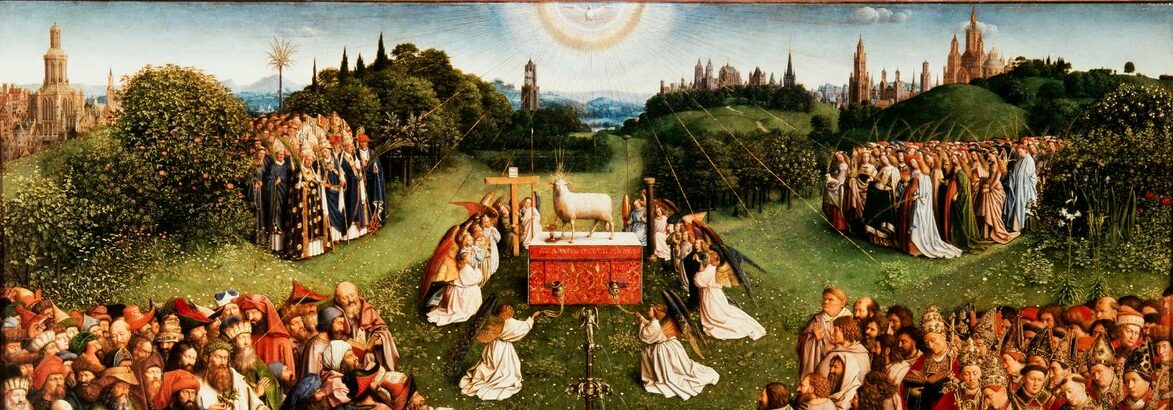
- Relation to the Christian feast of All Saints
- The witches’ sabbath and the Celtic calendar
- Introduction and development in America
- Symbols and traditional practices linked to the occult
- Modern and commercial aspects
- Testimonies of repentant witches and satanists
- Concrete dangers for children and society
- Christian position and alternatives
- Sources
- The two current aspects of the festival
The festival of Halloween has two distinct aspects today. It is greatly appreciated by children. They play at frightening themselves and amuse themselves by frightening those they meet. It is the day of disguise. When the date of Halloween approaches, children dress up with costumes that frighten and terrifying make-up. Even in certain public schools this festivity is celebrated, but most primary school inspectors forbid it.
It has another more secret aspect. The symbolism of the Halloween festival celebrates the obscure and dangerous spiritual powers, the satanic influences. It gives the idea that it is possible to call upon the demonic forces. This celebration of death has even sometimes become the celebration of the devil. Today, throughout the world, it is the most important ceremony for satanists. For many, it is only a folkloric ceremony where children dress up, a moment of relaxation, a game and costumes. The disguise amuses the children. Its active and visual side pleases them. Under its “child-friendly” airs, this pagan ceremony presents many dangers. It risks making us lose the sense of the Christian celebration of All Saints. Moreover, it is dangerous for children to trivialise the occult world and its hideous characters and to initiate them into the world of darkness. The deceased and their ghosts come with the demon to threaten us with death.
- Celtic historical origins
Three hundred years before Jesus Christ, a secret society of priests held the Celtic world under its sway. Every year on 31 October, they celebrated in honour of their pagan divinity Samhain a festival of Death. Priests going from house to house demanded offerings for their god and sometimes required human sacrifices. In case of refusal, they pronounced curses of death on that house, whence the “trick or treat”, curse or present, to be clearer: an offering otherwise the curse.
To light their way, these priests carried hollowed-out turnips cut in the form of a face, in which burned a candle made with human fat from previous sacrifices. These turnips represented the spirit that was going to make their curses effective. In the 18th and 19th centuries, when this custom arrived in the United States, turnips were replaced by pumpkins. The name given to the spirit that inhabited the pumpkin was “Jock”, which became “Jack” who lives in the lantern, whence the name “Jack-o-lantern”.
The word Halloween comes from “All Hallow’s Eve”: eve of All Saints. And one is tempted to associate it with this Christian tradition. In reality, the origins of Halloween are completely pagan and have no relation with this religious feast.
- Relation to the Christian feast of All Saints
The Christian predecessor of Halloween, All Saints of the Roman Catholics, was originally celebrated in May and not on 1 November. In 308, the Roman emperor Constantine appeased the population of the newly conquered pagan territories by granting them the right to keep their ancient rite of the Day of Samhain, in parallel with the last fixed feast, All Saints. The Pantheon of Rome, a temple built to worship a multitude of gods, was converted into a church. While the Christians celebrated their departed saints, the pagans dedicated the previous night to their “lord of death”.
- The witches’ sabbath and the Celtic calendar
The choice of 31 October is not a coincidence. 31 October is one of the four most important witches’ sabbaths, the four “cross-quarter” days of the Celtic calendar. The first, 2 February, popularly known as the “ground-hog” day in honour of Brigit, the pagan goddess of healing. The second, a May holiday named Beltane signalled the planting time for the witches. That day, the druids performed magical rites to favour the growth of the harvests. The third, a harvest festival in August in honour of the Sun god commemorated the shining one, Lugh. These first three “cross-quarter” days marked the passage of the seasons, the time to plant and the time to harvest, as well as the time of the death and the resurrection of the earth.
The last, Samhain, marked the arrival of winter. At that moment, the ancient druids performed rituals in which a cauldron symbolised the abundance of the goddess. It was said that it was a time of “betwixt and between”, a sacred season marked by superstition and spiritistic conjurations. For the druids, 31 October was the night when Samhain returned with the spirits of the dead. These had to be appeased; that is why one had to deal with them otherwise the living would be deceived. Immense fires were lit on the summits of the hills to frighten the evil spirits and appease the supernatural powers that controlled the processes of nature.
- Introduction and development in America
More recently, European immigrants, particularly the Irish, introduced Halloween into America. At the end of the 19th century, their customs had become famous. It was the occasion to overturn outdoor privies, to inflict damage on properties and to allow oneself pranks that would not have been tolerated at other times of the year.
Today, throughout the world, Halloween is the most important feast for satanists. 31 October is the new year of the witches’ calendar. The “Word Book Encyclopédia” affirms that it is the beginning of everything that is “cold, dark and dead” (froid, noir et mort). When we see children doing “trick or treat” and asking for sweets from house to house, it seems harmless and amusing, but are you not in the process of associating them, without being conscious of it, with a very dark ritual?
For parents of young children, an additional aspect of the invasion of the occult into culture must be addressed concerning Halloween. Do not imagine that this particular day has nothing to do with satanism. You will certainly be surprised in learning how 31 October has become a prologue to lead us to accept the occult. Whether you believe it or not, Halloween has become the day of the devil, ritually recognised by some worshippers of Satan and some occult groups in the USA (it is also taking root among us).
What are the facts about Halloween? Is it the moment to invoke the old Cornish prayer, “Good God deliver us from ghouls, ghosts, long-legged beasts that knock in the night”?
- Symbols and traditional practices linked to the occult
The traditional practices associated with Halloween are easily identifiable with the occult. The “Jack o’lantern” is drawn from a tale in which a famous man named Jack was chased both from heaven and from hell. Forced to wander on earth as a spirit, Jack put a burning coal in a hollowed turnip to light his way in the night. This precursor (which became a gourd) symbolised a damned soul. The colours orange and black can also be linked to the occult. They were related to the commemorative masses for the dead that took place in November. The beeswax candles, usually of cream colour, were orange during the ceremony and the ceremonial coffins were covered with black cloths.
Other evident links that Halloween has with the occult:
- Halloween costumes come from the idea of the Celtic druids who claim that the participants in the ceremonial had to wear animal heads and their skins in order to acquire the strength of the beast they represented.
- “Trick or treat” is drawn from the Irish tradition according to which a man led a procession to collect contributions from farmers for fear that their harvests would be damaged by demons.
- “Dunking for apples” came from an ancient practice to know the future. The participant who succeeded in catching between his teeth an apple in a barrel full of water could hope for a successful romance with the beloved of his choice.
- Cats represented incarnated humans, malevolent spirits or “intimate friends” of witches.
- Hazelnuts were used in romantic divination. Part of what one eats at Halloween contained objects placed inside the foods as means of telling fortune.
- Masks have traditionally been animistic means to protect oneself in a superstitious manner from evil spirits or so that the one who wears them can change personality in order to communicate with the world of spirits.
- Modern and commercial aspects
Today, Halloween is a prosperous day for merchants. It is a night during which decent persons become brazen exhibitionists. 60 percent of all Halloween costumes are sold to adults. On 31 October, one person in four, whose age ranges between 18 and 40 years, will wear the costume of some character. For persons having psychic powers, seers and those who call themselves visionaries, it is the busiest period of the year. Publishers of books on subjects classified between astrology and witchcraft indicate a strong increase in sales. Salem, a town in Massachusetts, seat of American witchcraft, now celebrates a “haunted event” at Halloween to prolong its summer tourist season.
- Testimonies of repentant witches and satanists
Public testimonies of repentant witches and satanists exist and affirm that Halloween constitutes for them an important day of occult or satanic practices. These accounts are reported in Christian media and interviews. They remain personal declarations; their factual accuracy has not been established by independent sources such as judicial archives or primary documents for each alleged detail. I do not present them as irrefutable material proofs.
Jenny Weaver, former witch, declared in an interview to the Christian Post (31 October 2021) that Halloween is “Satan’s playground”. She affirms that that day witches and warlocks devote more time to witchcraft to access the demonic realm, because the “veil” would be thinner. She adds that one cannot separate Halloween from its origins linked to witchcraft. Source: Christian Post, article by Nicole VanDyke, 31 October 2021.
John Ramirez, former satanist who presents himself as “general of the kingdom of darkness”, declared in interviews to CBN News (notably 2021) to have practised for 25 years, spoken to the devil, and to have married at Halloween during a demonic ceremony with animal sacrifices. He affirms that the month of October is “the month of witchcraft” and that participating in Halloween amounts to honouring the devil. Source: CBN News, articles and interviews of 2019 and 2021.
Riaan Swiegelaar, former leader of the Church of Satan, declared to CBN News (28 October 2025) that Halloween is “the highest day of the satanic calendar”, a moment of blood sacrifices, and that celebrating that day amounts to “spending a night with the devil”. He evokes rituals and an attraction of demonic activity. Source: CBN News, 28 October 2025.
Deborah Lipsky, former satanist who returned to the Catholic Church, declared to the National Catholic Register (31 October 2012) that Halloween is a “high holy day” for satanists because it constitutes a mockery of the feast of All Saints on 1 November. Instead of invoking the saints, they invoked demons and the damned. She advises Christians against participating in it, even with innocent costumes, because the whole is founded on the mockery of God and the saints. Source: National Catholic Register, interview by Trent Beattie, 31 October 2012.
A woman named Beth declared on her blog (reported by Christian Today on 22 October 2016) to have undergone a satanic ritual involving sexual abuse on the evening of Halloween and that this day is a “holy day” for witches and satanists. Source: Christian Today, 22 October 2016, citing her blog.
Anton LaVey, founder of the Church of Satan, writes in The Satanic Bible (Avon Books, New York, 1969) that, after the personal birthday, the two principal satanic feasts are Walpurgisnacht and Halloween. Anton LaVey, author of the Satanic Bible, minister of the Church of Satan, says that 31 October is one of the most important days for satanists.
Doreen Irving, who was the greatest witch of western Europe, concubine of the high minister of Satan in that same territory, one day converted to Christianity. She said that if parents had the slightest idea of what Halloween really is, they would not even mention this word in front of their children.
It is a proven fact that on the night of 31 October in the U.S.A., in France, Ireland and many other countries black masses with sacrifices, all kinds of spiritistic cults and other meetings in relation with evil take place. 31 October is a date known as being the most important of the satanism calendar. Nowadays, the night of Halloween is recognised by all satanists, adepts of the occult and of the devil as being the night of their new year.
It is equally a proven fact that the night of 31 October in the U.S.A. is the day when the greatest number of children disappear. Thus one reports numerous crimes committed by unscrupulous persons who conceal hidden sharpened blades, give poisoned caramels as gifts, or use syringes used for drugs.
- Concrete dangers for children and society
Halloween has other negative aspects, beside its pagan background, rooted in witchcraft, and its emphasis placed on the devil. The darkness. Some vandals are more interested in playing pranks than in obtaining gains. Certain parents fear that a demented criminal distributes poisoned sweets or candies containing pins or razor blades. There is also the danger that drivers do not see costumed children walking in poorly lit streets. Such associations do not however suggest that a parent authorising Halloween celebrations collaborates with the devil. However, it will be difficult to find a positive virtue in Halloween. Its symbolism includes demons, ghosts, witches, death, darkness, skeletons, fear and terror.
In the USA, certain groups fighting against occultism have successfully suppressed Halloween celebrations in public schools. Recently, a minister from Arkansas filed a federal lawsuit and asked that satanism, via Halloween practices, not be tolerated in public schools, given that prayer is forbidden there. Reverend Ralph Forbes considered the devil as the accused.
Does one not delay in realising a more serious evaluation concerning the eve of All Saints? Ask the lost cats shelter of Chicago. At each Halloween feast, it reports that searches concerning disappeared black cats increase. Fearing that the felines have been used in bloody rituals by improvised witches, the society against cruelty to animals has declared black cats unavailable for adoption during the Halloween season.
- Christian position and alternatives
In our contemporary world, where the evil of satanic origin is more than real, several think that it is the moment to purify Halloween of its unrecommendable elements. They feel that a prohibition of official Halloween observances would warn parents and children and that they would understand that the occult symbolism of Halloween celebrates obscure and dangerous spiritual powers. Parents could at least centre family activities on healthy amusements. They could hold a party, but refuse that costumes be related to evil. For example, some churches celebrate All Saints by dressing children in the manner of the saints of the Bible.
“Children are never too young to learn that a day must not be dedicated to the devil.”
Translation: Carol Voumard and Pierre-André Perrin. Taken from “Satanism – The Seduction of America’s Youth” by Bob Larson. Cited from “Jeunesse Libérée” no. 170, with authorisation. http://www.info-sectes.org/haloween/haloween.htm
- Sources
– Bob Larson, Satanism – The Seduction of America’s Youth.
– Jeunesse Libérée, no. 170.
– Site info-sectes.org, Halloween page.
– Anton LaVey, The Satanic Bible, Avon Books, New York, 1969.
– Christian Post, article by Nicole VanDyke, 31 October 2021 (interview with Jenny Weaver).
– CBN News, articles and interviews of 2019 and 2021 (John Ramirez); 28 October 2025 (Riaan Swiegelaar).
– National Catholic Register, interview by Trent Beattie, 31 October 2012 (Deborah Lipsky).
– Christian Today, 22 October 2016 (citing Beth’s blog).
– Word Book Encyclopédia (on the character “cold, dark and dead”).
– Reported testimony of Doreen Irving.